

The Guardian
A primary care physician sees the whole patient. An insurance company sees a case number.
May 2026
My personal care physician sent me a text after my cancer diagnosis while I was still in the emergency room.
Not a message through the patient portal. A text directly to my phone. It said she was sorry, that she was here for me, and that we would figure this out together. That is not a clinical protocol. That is a relationship.
Dr. Azucena Del Real has been my primary care physician for three years. She also cares for my wife. She knows us, not just our charts: my hypertension, the recent-onset Type 2 diabetes she caught early, the medications, the comorbidities, the history. When the CT confirmed cancer on April 14, she did not have to be briefed. She already knew the whole patient.
In medicine, that kind of knowledge has a name: continuity of care. In a fragmented specialist system, it is rarer than it should be.
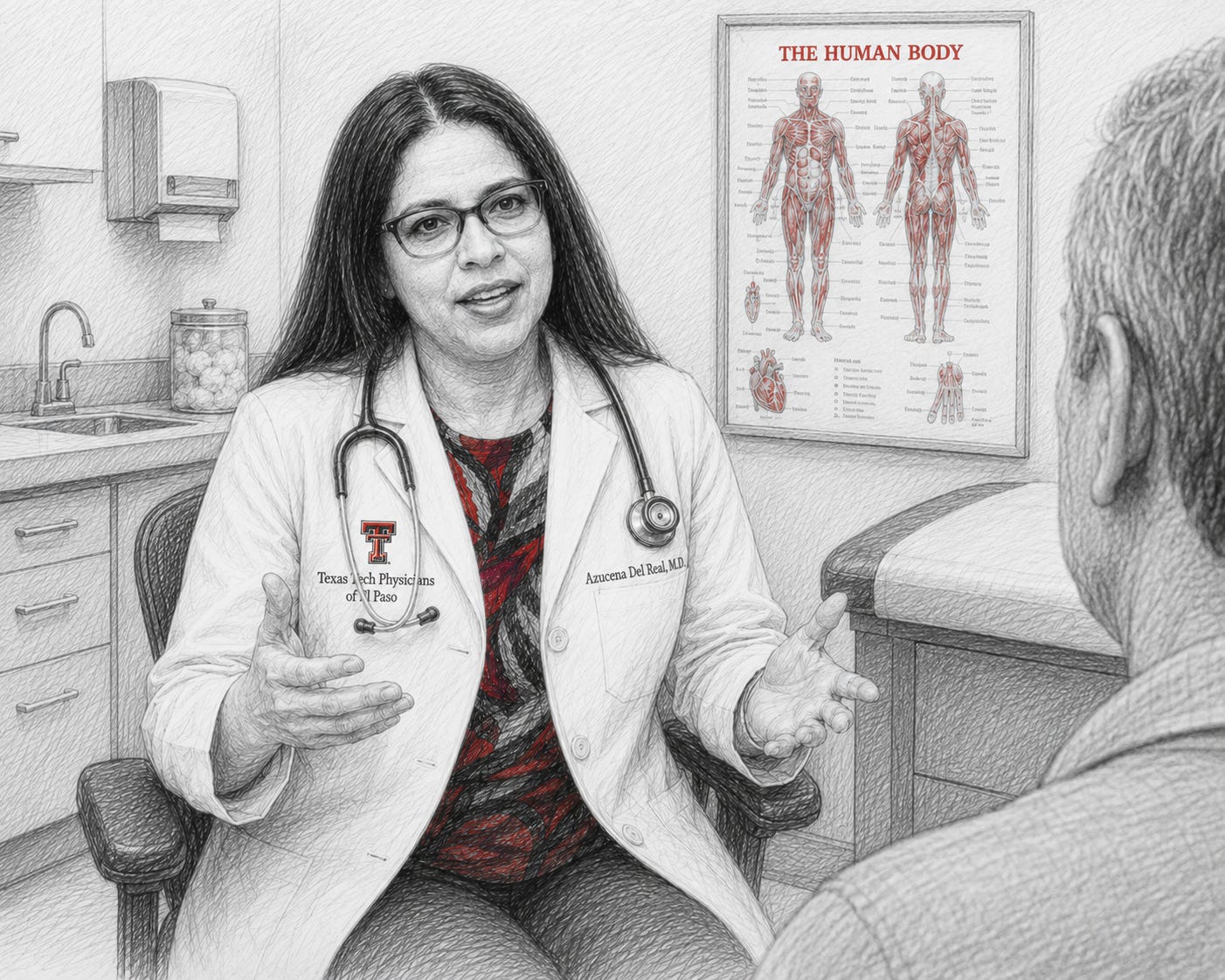
A stubborn advocate
Del Real’s father was a dermatologist who made Sunday house calls to small towns in Guanajuato, in central Mexico, compounding his own medications because his patients couldn’t afford commercial prescriptions. He died when she was nine. “Since I can remember,” she told me in a 2023 interview, “it’s been like I’m going to be a doctor, I’m going to be a doctor, I’m going to be a doctor,” emphasizing how stubborn she became in her pursuit.
She completed medical school in Tijuana in 2013 and spent five years qualifying for a U.S. residency. This included taking the medical licensing exams, completing a master’s in clinical research at UC San Diego, and working as a technician at a diabetes research organization, where she monitored patients’ insulin levels at 5- to 15-minute intervals, around the clock. That experience matters now. She doesn’t manage my diabetes from a textbook; she managed it first at the lab bench. She completed her internal medicine residency at the University of Texas Rio Grande Valley School of Medicine in Edinburg in 2022 and joined Texas Tech Physicians of El Paso’s Transmountain clinic shortly after.
Del Real entered medicine having already seen the system from the inside of the insurance apparatus. Somewhere between medical school and residency, she also worked as a high-risk case manager for an HMO in San Diego, approving or denying transfers, identifying why patients kept returning to the hospital, and arranging transportation for those unable to get to their appointments.
Del Real told me that internal medicine is not always well understood in this community. “We are family doctors, too,” she said, “though we see only adults—adults with preventive needs, with screenings, with highly complex diseases.” She divides her practice between the outpatient clinic and inpatient hospital medicine at the Hospitals of Providence Transmountain campus, where she manages direct patient care and co-manages patients in the surgical ICU. She also trains the next generation of hospital specialists, supervising medical residents who came to El Paso from around the globe.
During active cancer treatment, an oncology team manages tumors. The primary care physician manages everything else. In my case, that means multiple concurrent lines of comorbidities: blood sugar control through the metabolic stress of chemoradiation, blood pressure management against a chemo drug’s impact on the kidneys, coordination of pain management, and oversight of a prescription burden that is about to become substantial. None of these items appear on an oncologist’s daily agenda. All of them fall to Del Real.
Her philosophy of care is built around a single question she asks every patient before they leave: What do you know? “I take the time and I say, why are you here? What is happening? And then we leave with a closing conversation to make sure we both understand.” For a cancer patient navigating a system that rarely speaks to itself, the PCP who asks that question—and means it—is the difference between understanding what is happening to you and being processed by it.

Insurance
Overseeing my cancer involves more than medical responsibility. It also involves insurance responsibility.
The health plan for Texas Tech Health El Paso employees is an HMO, or health maintenance organization. In an HMO, the primary care physician serves as the plan’s gatekeeper: every specialist referral, imaging study, and procedure requires PCP authorization before the plan will cover it. The theory is that a knowledgeable gatekeeper prevents waste and unnecessary care. In practice, for a cancer patient, this means that a physician who already knows the clinical urgency must still file paperwork and wait for an insurance company that does not.
My appointment with the radiation oncologist was delayed by two weeks due to paperwork. That is not a complaint. It is a documented fact about how the system operates. An American Society for Radiation Oncology survey of 754 radiation oncologists found that 92 percent reported that prior authorization causes treatment delays, affecting more than a third of their patients on average; 68 percent said those delays lasted five days or longer; and 7 percent said prior authorization has contributed to a patient’s death.1 A Memorial Sloan Kettering study of 178 cancer patients found that 69 percent experienced a prior authorization delay, 73 percent of those delays lasted two or more weeks, and 89 percent of respondents trusted their insurance company less after the experience.2
HMOs defend this system as evidence-based utilization management. Critics call it a cost-avoidance mechanism dressed as clinical oversight. A NORC survey found that most Americans blamed insurance industry profits for coverage denials.3
Del Real has navigated this from both sides of the desk. She knows how authorization decisions are made because she made them. When she files a prior authorization on my behalf, she is not learning the system; she is renegotiating with one she once worked inside.

Deny and delay
As of this writing, Del Real has submitted eight prior authorization requests for me to see specialists or for procedures. Two, including my radiation oncologist visit and a PET scan, were initially denied due to what can best be described as coding errors by a third-party contractor that is neither the physician nor the insurance company.
The Fox Cancer Center, rising outside my office window two years before it opens, will not fix America’s prior authorization system. That is a federal and state policy problem that no single institution can resolve. What a comprehensive cancer center can do and what individual specialist practices cannot is build the kind of integrated care team that absorbs the administrative burden on behalf of the patient: a dedicated navigator, a coordinated authorization workflow, a case management infrastructure that moves at the speed of the disease rather than the speed of the queue. The argument for the Fox Cancer Center is partly about equipment and clinical expertise.
It is also about this: cancer patients in El Paso and their doctors should not spend their time fighting paperwork.
Dr. P.J. Vierra is a writer with Texas Tech Health El Paso’s Office of Institutional Advancement.
The views and opinions expressed here are those of the author, writing as a patient and a journalist, and do not represent the official position of Texas Tech Health El Paso. Clinical decisions should be made in consultation with a qualified healthcare provider.
Pearl Steinzor, “Prior Authorization Delays Cause Serious Harm to Patients with Cancer,” American Journal of Managed Care, December 3, 2024, https://www.ajmc.com/view/prior-authorization-delays-cause-serious-harm-to-patients-with-cancer.
Fumiko Chino et al., “The Patient Experience of Prior Authorization for Cancer Care,” JAMA Network Open 6, no. 10 (2023): e2338182, https://doi.org/10.1001/jamanetworkopen.2023.38182.
AP-NORC (Associated Press–NORC Center for Public Affairs Research), “Most Americans Blame Insurance Profits and Coverage Denials Alongside Killer in UnitedHealthcare CEO Shooting,” December 2024, https://apnorc.org.